
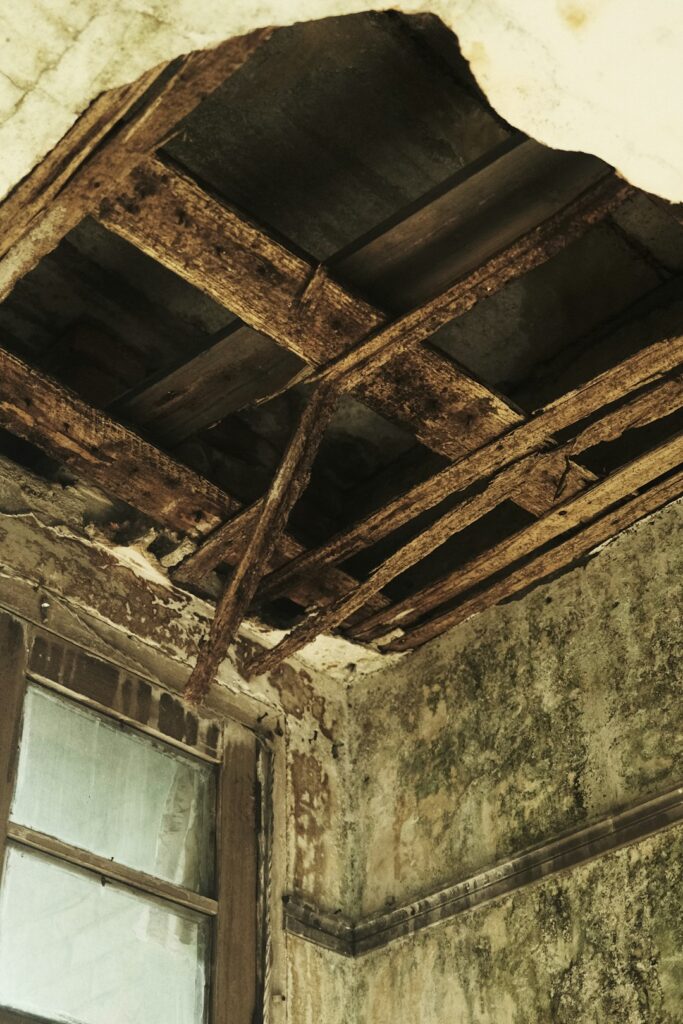
A roof leak rarely affects only the shingles or roofing surface. Water can travel through insulation, ceilings, wall cavities, framing, and electrical areas before the original source becomes obvious. In Massena, NY, repeated snow, ice, freeze-thaw cycles, wind, and seasonal rain can make roof leaks especially disruptive when moisture remains hidden between weather changes.
Understanding how water moves through a home can help residents recognize problems earlier and avoid structural damage that becomes more difficult to correct.
What happens to a home’s structure when the roof leaks?
A leaking roof can weaken wood framing, damage sheathing, reduce insulation performance, and create conditions that support mold growth and decay. The longer moisture remains present, the more likely it is to affect materials beyond the visible ceiling stain.
Water may enter through damaged shingles, flashing, roof penetrations, ice dams, worn sealants, or openings around chimneys and vents. It does not always drip straight down. It may run along rafters, roof decking, insulation, wiring, or plumbing before appearing in a room below.
This is why the visible stain is often smaller than the area that has been exposed to moisture.
Can a roof leak weaken rafters, trusses, or roof decking?
Yes. Persistent moisture can cause wood roof components to swell, soften, split, or decay. The roof decking—the layer installed over the rafters or trusses—may become weak around the leak. In more advanced cases, structural wood can lose strength and become vulnerable to sagging or movement.
Warning signs may include:
- A sagging area on the roof surface
- Ceiling or attic surfaces that bow downward
- Soft, crumbling, or darkened roof sheathing
- Rafters or trusses with visible staining, splitting, or fungal growth
- Doors or windows that begin sticking near a damaged area
A single brief leak does not always mean the framing has been compromised. Structural deterioration usually develops after repeated or prolonged wetting. However, a roof that continues to admit water should not be treated as a minor cosmetic issue.
How can water damage ceilings and walls?
Water often reaches drywall, plaster, paint, and wall insulation before the leak is discovered. Staining, bubbling paint, peeling surfaces, and soft drywall are common signs. A ceiling may develop a brown ring or sagging section, while a wall may show discoloration several feet away from the actual entry point.
Wet drywall can lose its strength and may eventually break apart. Plaster may separate from its supporting surface. Wall insulation can hold moisture for extended periods, slowing drying and reducing its ability to control indoor temperatures.
If water has entered a wall cavity, the outside surface may look only slightly marked even though insulation and framing behind it are wet. That hidden moisture can produce a musty odor and contribute to deterioration over time.
Does a roof leak cause mold?
A roof leak can create conditions that support mold growth, especially when building materials remain damp for more than a short period. Mold is more likely to develop in dark, poorly ventilated areas such as attics, wall cavities, and spaces above ceilings.
Mold is not limited to visible black or green patches. A persistent earthy or musty odor may be an early warning sign. Moisture can also lead to mildew on insulation, roof sheathing, ceiling materials, and stored belongings.
The underlying problem is not solved by wiping a surface or painting over a stain. If moisture continues entering the building, growth may return. Porous materials that have remained wet may also require removal rather than simple surface cleaning.
Can a roof leak affect electrical systems?
Yes. Water near electrical wiring, junction boxes, fixtures, outlets, or ceiling fans creates a safety concern. A leak may cause flickering lights, tripped breakers, buzzing sounds, or a burning odor, although electrical problems are not always immediately noticeable.
Water and electricity can create shock and fire hazards. If water is near a light fixture, outlet, electrical panel, or visible wiring, avoid touching wet components and keep people away from the area. Electrical inspection may be necessary before the affected system is used again.
Never assume that a ceiling fixture is safe simply because it is no longer dripping. Moisture may remain inside the box or along wiring after the visible water stops.
Why are winter roof leaks a concern in Massena?
Cold-weather conditions can make roof leaks harder to detect and may increase the chance of repeated moisture exposure. Snow can cover damaged roofing, while ice buildup near roof edges may prevent melting snow from draining normally. Water can then move beneath roofing materials and enter the attic or wall system.
Freeze-thaw cycles add another complication. Water that enters a small crack or opening can freeze, expand, and enlarge the damaged area. Repeated freezing and thawing may also stress flashing, sealants, roof penetrations, and masonry joints.
Heavy snow can add weight to already weakened roof components. A leak alone may not cause a roof to fail, but water-damaged wood combined with substantial snow loading deserves prompt attention, particularly if there is visible sagging or unusual movement.
What damage can remain after a leak stops?
A roof may stop leaking temporarily while damage continues inside the home. Dry weather can make the problem appear resolved even though insulation, sheathing, or framing has not fully dried.
Hidden effects may include:

- Warped roof decking
- Corroded fasteners
- Deteriorated insulation
- Rusted electrical components
- Stained or weakened drywall
- Wood decay around roof openings
- Musty odors from trapped moisture
A stain that dries does not confirm that the roof system is sound. The source may still reopen during the next period of rain, snowmelt, or strong wind.
What should residents check after noticing a leak?
Start by documenting where water appears and whether the location changes during rain, snowmelt, or wind. If it is safe to do so, inspect the attic from a stable surface rather than walking on ceiling materials or insulation. Look for damp insulation, darkened wood, water trails, or daylight entering through the roof.
Inside the living space:
- Place a container under active dripping.
- Move furniture and belongings away from the affected area.
- Keep clear of sagging ceilings.
- Do not puncture a bulging ceiling unless a qualified person has assessed the situation and the area can be made safe.
- Shut off power to a wet electrical area only if the electrical panel and surrounding floor are dry and access is safe.
Roof surfaces covered by snow or ice should not be climbed without proper equipment and training. Falls, concealed weak areas, and unstable snow conditions can create serious hazards.
When does a leak require urgent attention?
Urgent action is appropriate when water is entering rapidly, a ceiling is sagging, roof framing appears damaged, electrical components are wet, or the roof has visible structural movement. A strong musty odor, widespread staining, or signs of active decay also indicate that the problem may extend beyond a small repair.
The sooner moisture is stopped and wet materials are evaluated, the better the chance of limiting damage to structural wood, insulation, ceilings, and interior finishes. In a climate with substantial winter weather, delaying until the next warm season can allow repeated melting and refreezing to enlarge the affected area.
A roof leak is therefore more than a roofing-surface problem. It can influence the strength, safety, insulation, air quality, and durability of the entire home. Early recognition of water trails, sagging materials, odors, and electrical warning signs gives homeowners a better opportunity to prevent a localized leak from becoming a broader structural problem.
