
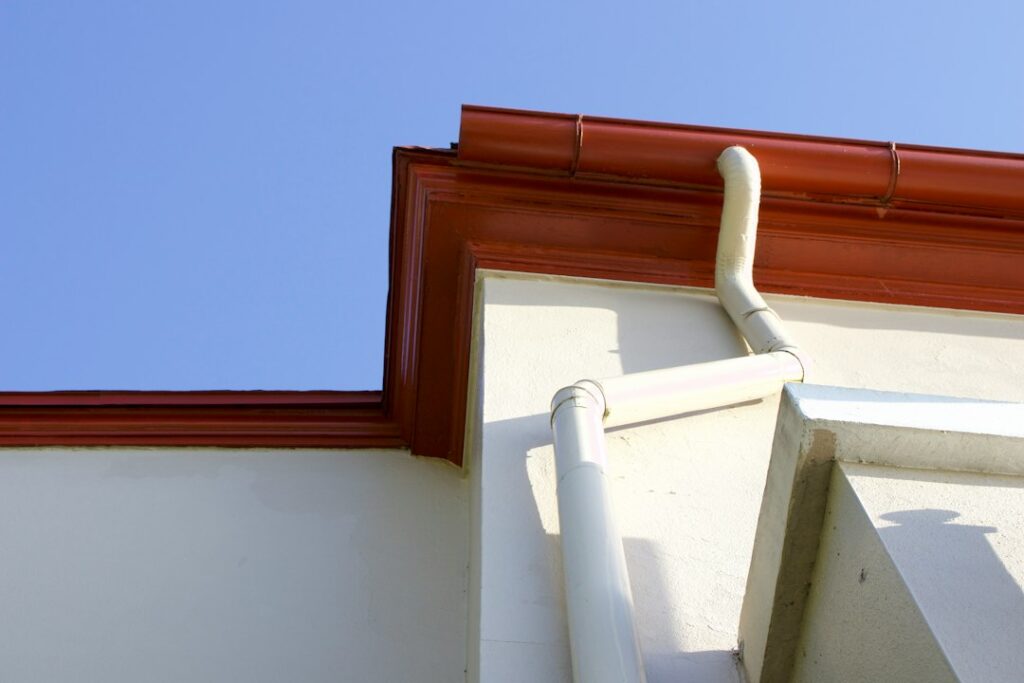
Soffits and fascia are two exterior components that help protect a roof’s edges, attic, and walls. Although they are often noticed only when they begin to rot, sag, or stain, both parts play an active role in ventilation, water management, and the long-term condition of a home.
What are soffits and fascia?
A soffit is the material installed underneath a roof overhang. Looking up from the ground, it is the horizontal surface beneath the eaves. Soffits may be made from aluminum, vinyl, wood, fiber cement, or other exterior materials.
Fascia is the vertical trim board or panel attached to the outer edge of the roof. Gutters are commonly fastened to the fascia, which means this component must support both its own weight and the weight of water, ice, leaves, and snow held in the gutter system.
Together, soffits and fascia form a transition between the roof, attic, exterior walls, and drainage system. They also cover exposed roof framing and help give the roof edge a finished appearance.
What does a soffit do?
The main functions of a soffit are to protect the underside of the roof overhang and allow controlled airflow into the attic. Vented soffit panels provide intake ventilation, allowing cooler outdoor air to enter near the lower edge of the roof.
That incoming air works with exhaust ventilation near the upper part of the roof. A balanced system can help remove heat and moisture from the attic, reducing conditions that contribute to:
- Condensation on roof framing
- Damp insulation
- Mold or mildew growth
- Premature aging of roof materials
- Ice buildup caused by uneven roof temperatures
Not every soffit is vented. Some areas may use solid panels because ventilation is not needed there, while other sections may have continuous or individual vent openings. Blocking vented soffits with insulation, paint, nests, or debris can reduce airflow and create attic moisture problems.
In a cold, snowy climate, attic ventilation does not eliminate ice dams by itself. Proper insulation, air sealing, roof design, and snow conditions also matter. However, clear soffit intake openings are an important part of a properly functioning roof system.
What does fascia do?
Fascia protects the outer ends of rafters and other roof framing from rain, wind, insects, and repeated wetting. It also creates a solid edge for attaching gutters and helps keep water directed away from exterior walls.
Damaged fascia can cause problems beyond appearance. If the material becomes soft or detached, gutters may pull away from the roof edge or develop an incorrect slope. Water can then spill over the front of the gutter, collect near the foundation, or run behind the fascia and into the wall assembly.
Fascia is especially vulnerable where roof runoff is concentrated, such as:
- Beneath valleys
- Near roof transitions
- Around chimney and wall intersections
- At the ends of gutters
- Where flashing is loose or missing
Because fascia is located directly below the roof edge, a problem in the shingles, flashing, or gutter system may show up as fascia damage even when the fascia itself was not the original source of the leak.
How do soffits and fascia work together?
Soffits and fascia help close and protect the roof edge while supporting separate but related jobs. The soffit covers the underside and may provide intake ventilation. The fascia closes the outer edge and supports the gutter system.
A properly detailed roof edge generally keeps water outside the wall and roof structure while allowing air to enter through designated soffit openings. If either component is installed incorrectly, the entire edge can perform poorly.
For example, a gutter that is fastened only to deteriorated fascia may sag and allow water to reach the roof edge. Likewise, a well-built fascia system cannot correct attic moisture problems if soffit vents are blocked or if warm indoor air is leaking into the attic.
What damage should homeowners look for?
Soffit and fascia damage is often visible from the ground, although some problems require a closer inspection. Useful warning signs include:
- Peeling paint, bubbling coatings, or dark stains
- Sagging, cracked, warped, or loose panels
- Small holes caused by insects or animals
- Water marks beneath the roof overhang
- Gutters that pull away from the fascia
- Rusted or missing fasteners
- Mold-like discoloration
- Icicles forming repeatedly in the same roof areas
- Birds, squirrels, or insects entering the attic through the eaves

Soft wood is a particularly important warning sign. Pressing on a painted board with a finger or tool may reveal deterioration, but climbing ladders or walking near an unstable roof edge can create unnecessary risk.
In homes with wood soffits or fascia, paint condition matters because exposed end grain absorbs moisture readily. In homes with vinyl or aluminum coverings, damage may appear as cracks, dents, loose sections, or openings at the joints.
Can damaged fascia cause roof leaks?
Damaged fascia can contribute to leaks, but it is not always the original cause. Water may enter because of failed flashing, worn roofing materials, clogged gutters, ice-related movement, or improper drainage. Once water reaches the roof edge, it can soak the fascia and the framing behind it.
A leak involving the fascia should therefore be evaluated as part of the entire roof-edge assembly. Replacing only the visible board may leave the underlying moisture source untreated.
Water staining inside an attic, ceiling, or exterior wall deserves particular attention. Moisture that appears around a roof overhang can travel along framing before becoming visible, so the location of an interior stain does not always match the entry point.
How do Massena winters affect these components?
In Massena, NY, roof edges face repeated cycles of snow, freezing temperatures, thawing, wind, and refreezing. These conditions can stress gutters, fasteners, sealants, and painted wood.
Heavy snow and ice may add weight to gutters and pull against the fascia. Freeze-thaw movement can enlarge small cracks and loosen joints. Snow that melts during a warm period may refreeze near the eaves, allowing water to back up beneath roofing materials if drainage and attic conditions are unfavorable.
Spring is often a useful time to inspect these areas because winter damage becomes easier to see after snow has cleared. Autumn maintenance also matters: leaves, twigs, and roof debris can obstruct gutters and contribute to overflow near the fascia.
Does replacing soffits or fascia improve a home?
Replacement can improve protection and appearance when the existing material is deteriorated, but new panels do not automatically solve ventilation or drainage problems. The underlying roof edge, gutter attachment, flashing, insulation, and vent openings should be considered together.
Material choice also affects maintenance. Aluminum and vinyl generally resist rot, while wood can be repaired and painted but requires more regular attention. Any material can fail if water is trapped behind it, fasteners are poorly placed, or the roof edge is not properly flashed.
The most useful goal is not simply covering damaged surfaces. It is restoring a dry, secure roof edge with functioning ventilation and reliable water flow.
When is repair a safety issue?
Soffit and fascia work may involve ladders, roof edges, unstable gutters, hidden rot, and electrical or structural hazards. Professional evaluation is appropriate when materials are loose above entrances, gutters are pulling away, wood is extensively soft, water is entering the attic, or roof access is required during icy or snowy conditions.
Residents can safely observe many warning signs from the ground and keep gutters clear when conditions are stable. More involved work should account for fall hazards and the possibility that visible damage extends into roof framing or wall components.
