

Rain on a roof can be relaxing for some households, but heavy showers, freezing rain, and spring storms can create surprisingly loud indoor noise. In Massena, NY, where roofs must handle long winters, snow, ice, wind, and changing temperatures, the sound may come from more than the roofing surface alone.
The most effective approach is to identify the source of the noise first. Roofing material, attic insulation, roof framing, ventilation, gutters, skylights, and even loose exterior components can all affect how rain sounds inside a home.
Why does rain sound loud on some roofs?
Rain noise is usually caused by vibrations traveling through the roof covering and the building structure. Thin or rigid materials can produce a sharper tapping sound, while larger roof surfaces may amplify repeated impacts.
Common reasons include:
- Metal roofing transmitting distinct tapping sounds during heavy rain
- Low attic insulation allowing sound to pass directly into living areas
- Finished ceilings with little space for sound absorption
- Loose gutters, downspouts, flashing, or trim rattling during storms
- Roof sections over bedrooms or other quiet rooms
- Skylights and roof windows creating hard, reflective surfaces
- Rainwater striking lower roofs, porch roofs, or exterior vents
The roof covering is only one part of the sound path. A roof with good acoustic insulation may be relatively quiet even if the exterior material itself produces noticeable impact noise.
Can attic insulation reduce rain noise?
Yes. Adding or improving attic insulation is often one of the most practical ways to reduce sound from rainfall, especially when the attic is unfinished and accessible.
Insulation works by slowing the movement of sound energy through the ceiling and roof assembly. Fiberglass, mineral wool, cellulose, and certain spray-applied products can all contribute to sound control, although their performance depends on installation quality and the overall construction of the roof.
For an unfinished attic, useful improvements may include:
- Increasing insulation between ceiling joists
- Filling thin or uneven areas
- Sealing obvious air gaps around wiring, plumbing penetrations, and attic access panels
- Adding insulation around the attic hatch
- Installing weatherstripping or compression seals around the hatch frame
Air leaks matter because sound can travel through small openings. A well-insulated ceiling with an unsealed attic hatch may still allow considerable noise into the rooms below.
In cold-climate homes, insulation work must also preserve proper attic ventilation and moisture control. Blocking soffit vents or compressing insulation against ventilation pathways can contribute to condensation and roof problems.
Would a finished ceiling make the rooms quieter?
A finished ceiling can reduce rain noise, but the result depends on how it is built. A single layer of drywall attached directly to framing provides less sound separation than a ceiling designed with additional mass and reduced vibration transfer.
Possible sound-control features include:
- Additional drywall layers
- Resilient channels or isolation clips
- Acoustic insulation between ceiling joists
- Carefully sealed joints and penetrations
- Solid, well-fitted attic access doors
These measures are more involved than simply adding surface insulation. They may be considered during a renovation, attic conversion, or ceiling replacement rather than as a first step for a minor noise concern.
Soundproofing materials should not be installed in a way that interferes with roof ventilation, electrical safety, recessed lighting clearances, or required fire protection.
Does the type of roofing material affect noise?
Yes, roofing material influences the character and volume of rain noise, but it does not determine the result by itself.
Metal roofing often produces a more distinct tapping sound than asphalt shingles, particularly when installed over a solid deck without sufficient insulation beneath it. However, a properly assembled metal roof with solid decking, underlayment, insulation, and a finished ceiling may be quieter than an older roof with inadequate insulation.
Asphalt shingles usually soften rain impact more than exposed sheet metal, but they are not silent. Noise can still be noticeable when the roof deck is thin, the attic is lightly insulated, or rain is striking a large uninterrupted section.
Wood shakes, slate, and other roof coverings also have different sound characteristics. Changing the entire roof material solely to reduce rain noise is usually a major project and may not address the actual source if the attic or ceiling assembly is the weak point.
Can underlayment or roof decking help?
Roof underlayment and decking can influence sound transmission. Solid roof decking generally provides more mass and stability than widely spaced supports, while quality underlayment can slightly reduce vibration and impact transfer.
These components are normally installed or replaced as part of roofing work rather than added from inside a completed roof. If an existing roof is being replaced, the assembly can be reviewed for:
- Damaged or flexible decking
- Missing sections of underlayment
- Loose fasteners
- Gaps that allow movement
- Areas where the roof surface vibrates under weather conditions
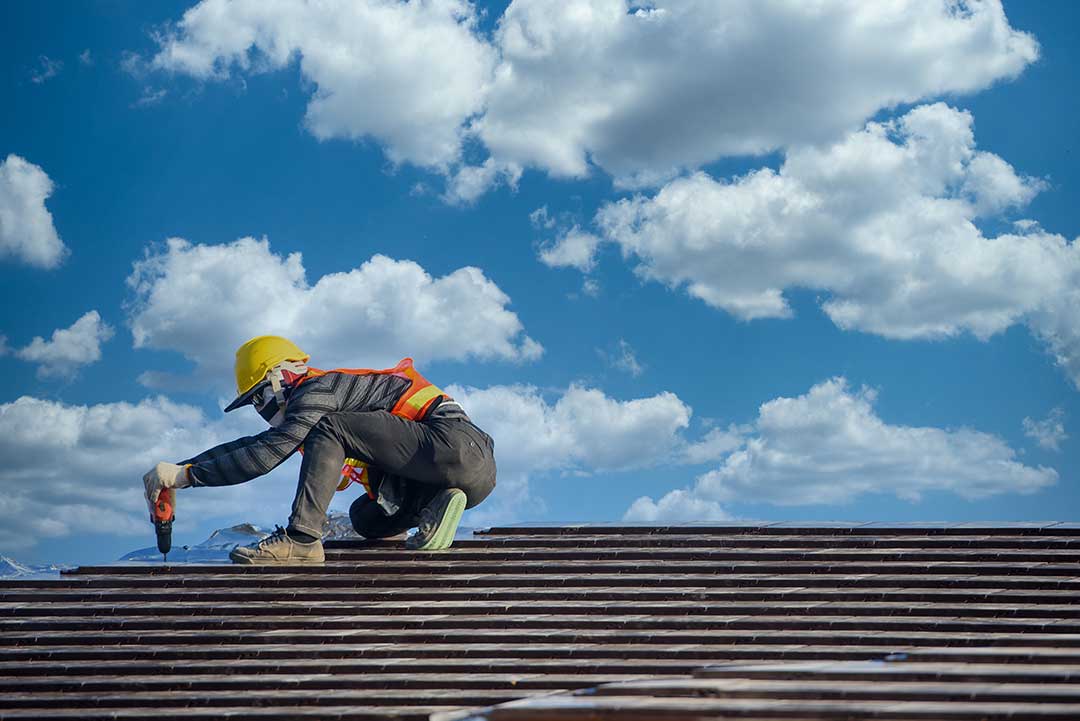
Underlayment should not be treated as a complete soundproofing layer. Its primary purposes involve water management and roof protection, while noise reduction is a secondary benefit.
What if the noise is coming from gutters or flashing?
A rattling or clattering sound may not be rain hitting the roof at all. Loose gutters, downspouts, metal flashing, attic vents, chimney components, and roof trim can move during rainfall and wind.
The sound may be especially noticeable when:
- A gutter is pulling away from the fascia
- A downspout is loose against the wall
- Water is overflowing onto a lower roof
- A metal edge is not firmly secured
- A vent cap or flashing section has loosened
- Ice has shifted or damaged exterior components
A visual inspection from the ground can reveal sagging gutters, separated joints, or pieces of trim that move during windy weather. Roof access becomes hazardous when surfaces are wet, icy, or snow-covered, so climbing onto the roof during a storm is not a safe method of investigation.
How can skylights and roof windows be made quieter?
Skylights can transmit more rain noise than nearby insulated roof areas because glass or acrylic surfaces reflect and transfer impact sound. Interior shades, insulated blinds, or sound-rated coverings may soften the noise without altering the roof.
If a skylight suddenly becomes louder, the issue may involve a loose frame, deteriorated seal, cracked glazing, or water entering around the unit. Water stains, bubbling paint, drafts, or damp trim should be treated as signs of a possible leak rather than a simple sound problem.
Are roof coatings useful for reducing rain noise?
Roof coatings generally are not a reliable solution for indoor rain noise. They may serve specific waterproofing or maintenance purposes on compatible roof systems, but a thin coating does not add enough mass or insulation to significantly change sound transmission in most homes.
Likewise, adding materials directly over shingles or metal without considering drainage, ventilation, weight, and manufacturer requirements can create new roof problems.
What should residents check first?
Start with the simplest observations:
- Determine whether the noise occurs during light rain, heavy rain, wind, or all three.
- Listen for whether it comes from the roof surface, attic, gutters, skylights, or walls.
- Check the attic for thin insulation, visible daylight, dampness, or loose components.
- Inspect the attic hatch for gaps and poor fit.
- Look from the ground for sagging gutters, loose downspouts, or water striking lower roof sections.
- Note whether the noise began after a roof replacement, storm, insulation project, or attic renovation.
In a winter climate, moisture deserves equal attention. Condensation, ice dams, roof leaks, and blocked ventilation can create sounds that are mistaken for ordinary rain noise. Dripping, staining, musty odors, or damp insulation indicate a building-envelope concern that should not be covered up with sound-control materials.
A quieter roof usually comes from several compatible improvements working together: secure exterior components, a sound roof deck, adequate insulation, sealed air gaps, and a ceiling assembly suited to the home. The right solution depends on whether the noise is transmitted through the roof, carried through the attic, or produced by a loose part outside.
