
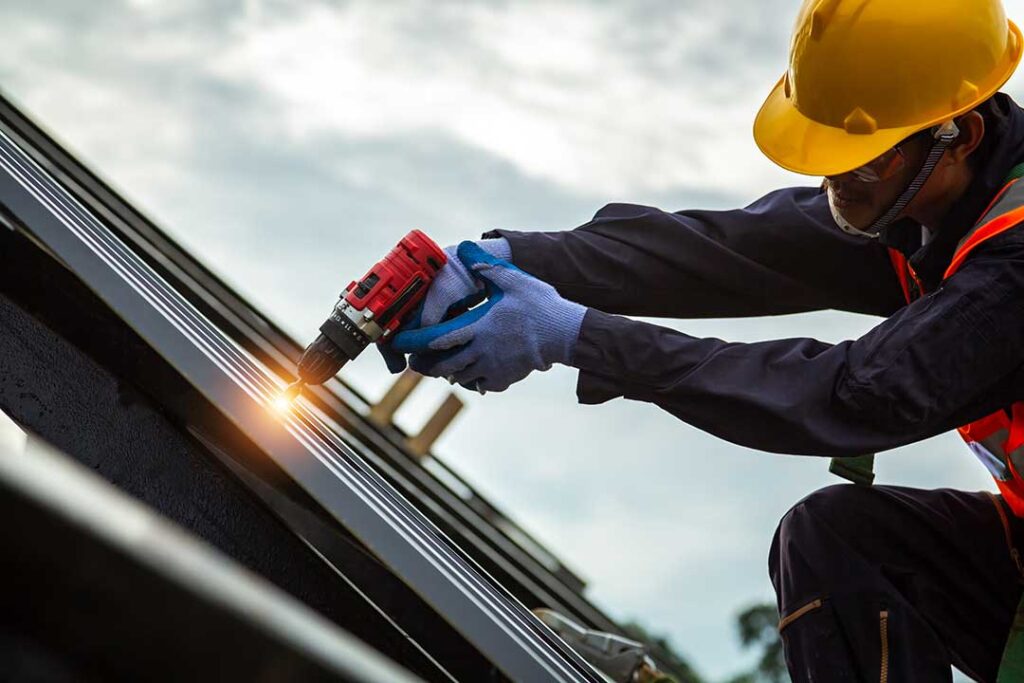
Which roofing materials last the longest?
The most durable roofing materials are typically natural slate, metal, clay tile, concrete tile, and high-quality synthetic products. Their service lives can range from several decades to well over a century, but durability depends on more than the material itself.
Roof pitch, ventilation, flashing, installation quality, snow management, maintenance, and the strength of the roof structure all affect how long a roof performs. A premium material installed on a poorly designed or overloaded roof may fail sooner than a less expensive material installed correctly.
For homes in Massena, NY, the roof must also handle repeated freeze-thaw cycles, winter snow, ice, wind, and rapid changes between wet and dry conditions. New York’s residential code includes mapped ground-snow-load requirements, making structural capacity an important consideration when heavier roofing materials are being considered. ([dos.ny.gov](https://dos.ny.gov/nys-residential-code-noa-7242025?utm_source=openai))
Is slate the most durable roofing material?
Natural slate is often considered the longest-lasting conventional roofing material. Properly selected and installed slate can remain serviceable for 75 to more than 100 years, with some roofs lasting much longer.
Slate is dense, fire-resistant, resistant to rot, and largely unaffected by insects. It also maintains its appearance without the surface granule loss associated with asphalt shingles.
Its main limitation is weight. Slate can place substantial demands on roof framing, especially on older homes that were originally designed for lighter roofing. Individual pieces can also crack if walked on improperly or struck by falling branches. Repairs may require matching slate thickness, color, and fastening methods, which can be difficult on older roofs.
Slate is best suited to buildings with adequate structural capacity, appropriate roof pitch, and detailing designed for the material.
How durable is metal roofing?
Metal roofing can last roughly 40 to 70 years, depending on the metal, coating, panel design, fasteners, and exposure. Copper and some high-quality standing-seam systems may last considerably longer.
Metal performs well against fire, wind, rain, and snow. Smooth or steeply pitched panels can also shed snow readily, although that characteristic creates a need to consider snow guards over entrances, walkways, and other areas where sliding snow could be hazardous.
Durability problems usually begin at fasteners, seams, penetrations, valleys, and exposed cut edges rather than across the broad metal surface. Corrosion can develop if incompatible metals are placed together or if protective coatings are damaged.
Metal roofs are not automatically maintenance-free. Fastener checks, sealant inspection, debris removal, and attention to damaged coatings can extend service life.
Do clay and concrete tiles work well in a cold climate?
Clay and concrete tiles can last 50 years or more when properly installed. They resist fire, insects, and decay, and they can retain their appearance for many decades.
The main concern in a cold, snowy region is not simply temperature. Water can enter small cracks or porous areas, freeze, expand, and gradually damage the tile. Improper underlayment, inadequate flashing, and poor drainage can create problems even when the tiles themselves are durable.
These materials are also heavy. Structural evaluation is necessary before placing tile over an existing roof assembly. Concrete tile may be more widely available than traditional clay tile, but it still requires appropriate framing, underlayment, slope, and fastening.
Tile systems should not be judged only by the visible surface. The underlayment beneath the tiles is a major part of their weather protection.
Are synthetic slate and composite shingles durable?
Synthetic slate and composite roofing products are designed to imitate slate, wood, or tile while reducing weight and maintenance demands. Many can last 30 to 50 years, although actual performance varies significantly by product formulation, thickness, ultraviolet resistance, impact resistance, and installation method.
Their lighter weight can make them practical where natural slate or tile would require structural changes. They may also be less vulnerable to breakage from routine foot traffic or occasional impact.
The challenge is long-term product history. Natural slate and traditional metal have decades of documented performance in many buildings. Newer synthetic materials may have shorter track records, so published testing, warranty limitations, replacement availability, and fastening instructions deserve careful review.
A synthetic product should be evaluated as a complete roofing system rather than by appearance alone.
How long do asphalt shingles last?
Architectural asphalt shingles commonly last about 20 to 30 years, while basic three-tab shingles generally have shorter service lives. High-quality architectural products may perform longer under favorable conditions, but local weather and installation quality make a major difference.
Asphalt shingles are lighter and generally less expensive than slate, tile, or many metal systems. They are also easier to repair with commonly available materials. Those practical advantages make them a reasonable choice for many homes.
However, asphalt shingles are more vulnerable to ultraviolet exposure, wind damage, algae growth, granule loss, and repeated moisture changes. In northern climates, poor attic ventilation and inadequate ice-dam protection can shorten their useful life.
A long-lasting asphalt roof depends on more than the shingle label. Important details include:
- Properly installed underlayment and flashing
- Adequate attic ventilation
- Correct nail placement and fastening
- Ice-barrier protection where required
- Sound roof decking
- Regular removal of leaves, branches, and other debris
What makes a roofing material durable in Massena?
The most suitable material must match the building and the local exposure. Long service life depends on several interacting conditions:
- Snow and ice: The roof structure, slope, drainage, and snow-shedding behavior must work together.
- Freeze-thaw cycling: Materials and flashing must tolerate repeated expansion, contraction, and moisture intrusion.
- Wind: Proper fastening and edge detailing reduce the risk of lifted panels, shingles, or tiles.
- Ventilation: A balanced attic ventilation system helps limit heat and moisture buildup.
- Roof geometry: Valleys, low-slope areas, dormers, chimneys, and skylights require especially careful flashing.
- Maintenance access: A material that cannot be safely inspected may be harder to maintain over time.
The 2025 Residential Code of New York State includes requirements related to snow loads, wind design, roof coverings, and structural continuity. The code became fully effective on December 31, 2025, so roofing work planned after that date should be evaluated under the applicable current requirements. ([dos.ny.gov](https://dos.ny.gov/division-building-standards-and-codes-frequently-asked-questions?utm_source=openai))
Which durable roofing material is the best choice?
There is no single best material for every house. Natural slate generally offers the longest potential service life, but it is heavy and costly to repair. Metal offers a strong balance of longevity, snow performance, and relatively low weight. Clay and concrete tile can be highly durable but require suitable framing and careful cold-weather detailing. Synthetic products may provide a lighter alternative, while asphalt shingles remain practical when budget, repairability, and installation conditions are priorities.
The most reliable decision considers the entire roof assembly—not just the outer covering. A durable roof has compatible materials, sound decking, properly designed drainage, secure flashing, adequate ventilation, and structural capacity suited to the expected snow and wind exposure.
Before comparing material lifespans, homeowners should determine whether the existing roof can support the desired covering, whether the roof has vulnerable low-slope sections, and whether past moisture damage has weakened the decking or framing. Those factors often matter more than a published lifespan number.
